2026 NFL Salary Cap Adjustments: 15% Increase Impact Analysis
The projected 15% increase in the 2026 NFL salary cap will significantly reshape team roster construction, free agency dynamics, and long-term financial planning across the league, demanding strategic adjustments from all franchises.
The landscape of professional football is constantly evolving, and few factors exert as much influence as the NFL salary cap. The anticipated 15% increase in the 2026 NFL Salary Cap is poised to dramatically alter team strategies, player valuations, and the very fabric of roster construction across the league. This significant adjustment promises a wave of financial implications and strategic opportunities that every franchise must meticulously navigate.
Understanding the NFL Salary Cap Mechanism
The NFL salary cap is a crucial financial tool designed to maintain competitive balance among all 32 teams. It dictates the maximum amount of money each team can spend on player salaries in a given league year. This cap isn’t a static number; it fluctuates based on various economic factors, primarily league revenues from media deals, sponsorships, and ticket sales. A projected 15% increase for 2026 signals robust financial health for the NFL and opens new avenues for team management.
The collective bargaining agreement (CBA) between the NFL and the NFL Players Association (NFLPA) outlines the formula for calculating the salary cap. This formula ensures that a certain percentage of the league’s total revenue is allocated to player salaries. When revenues surge, as they are expected to do leading up to 2026, the cap naturally rises, providing teams with more financial flexibility.
How the Cap is Calculated
- League Revenues: Primary driver, including broadcasting rights, sponsorships, merchandise sales, and gate receipts.
- Player Benefits: A portion of the cap is allocated to player benefits, which is factored into the overall spending limit.
- Adjustments: Carryover space from previous years and certain accounting adjustments can slightly modify a team’s effective cap.
Understanding these underlying mechanisms is vital to grasping the full scope of a 15% increase. It’s not just a bigger number; it represents a larger slice of an expanding pie, directly impacting how teams can invest in their most valuable assets: the players. This increase is a testament to the league’s continued growth and popularity, translating directly into more resources for teams.
In essence, the salary cap acts as a financial equalizer, preventing wealthier teams from simply outspending their competition indefinitely. While teams can roll over unused cap space from year to year, there are limits to this flexibility. The upcoming increase will provide a significant boost, allowing many teams to reset their financial outlook and pursue more aggressive strategies in player acquisition and retention.
Impact on Team Roster Construction and Player Valuations
A substantial 15% increase in the 2026 NFL Salary Cap will fundamentally reshape how general managers approach roster construction. This isn’t merely an incremental adjustment; it’s a significant leap that will allow teams to retain more star talent, pursue higher-profile free agents, and potentially invest more deeply in specific position groups. The ripple effects will be felt across all 32 franchises, from perennial contenders to rebuilding squads.
Player valuations are inextricably linked to the salary cap. With more money available, the market value for top-tier talent, particularly quarterbacks, edge rushers, and offensive linemen, is expected to surge. Teams will have greater capacity to offer lucrative, long-term contracts, potentially leading to fewer star players hitting the open market. This could also drive up the cost of retaining internal talent, as players will naturally seek contracts that reflect the increased cap space.
Strategic Adjustments for Teams
- Retaining Core Talent: Teams can offer more competitive extensions to their own star players, reducing the risk of losing them in free agency.
- Aggressive Free Agency: Franchises with significant cap space can target premium free agents, potentially signing multiple high-impact players.
- Draft vs. Free Agency Balance: The increased cap might influence the balance between building through the draft and acquiring proven veterans via free agency.
Teams that have been fiscally responsible in previous years, accumulating cap space, will be in an advantageous position to capitalize on this increase. Conversely, teams already operating close to the cap will face tough decisions, potentially needing to restructure existing contracts or part ways with valuable veterans to create necessary room. The strategic implications are vast, requiring foresight and adaptability from front offices.
The rise in player valuations will also affect how teams manage their rookie contracts. As veteran salaries increase, the value of players on cost-controlled rookie deals becomes even more pronounced. This could lead to a greater emphasis on drafting well and developing young talent, as these players offer exceptional value against a backdrop of escalating veteran salaries. Ultimately, every roster decision will be viewed through the lens of this expanded financial framework.
Free Agency Frenzy: A New Era of Spending
The prospect of a 15% increase in the 2026 NFL Salary Cap is set to ignite the free agency market, ushering in a new era of spending and competition for top talent. With significantly more financial resources at their disposal, teams will be more aggressive in pursuing impact players, potentially leading to a highly dynamic and unpredictable free agency period. This will undoubtedly be a fascinating time for fans and analysts alike.
Historically, a rising salary cap correlates with an uptick in both the number and value of contracts signed in free agency. Star players who hit the open market in 2026 can expect unprecedented offers, as teams vie for their services with deeper pockets. This could particularly benefit players at premium positions, where demand often outstrips supply, such as quarterbacks, pass rushers, and elite offensive tackles.
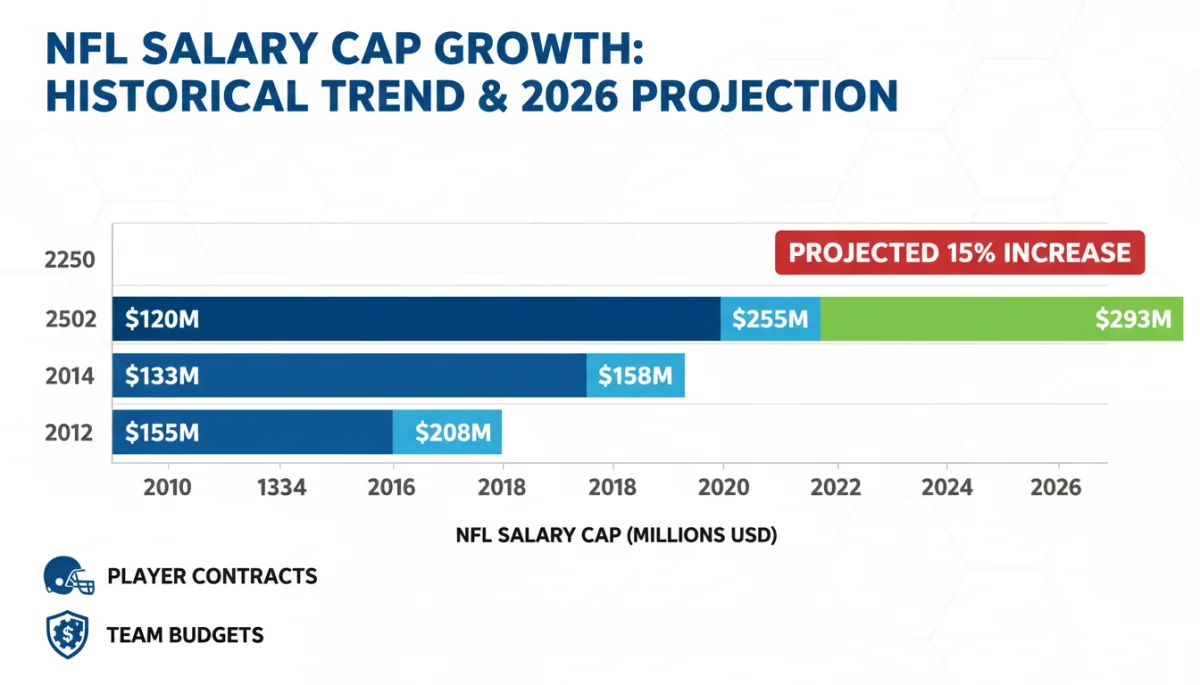
However, this increased spending power also comes with risks. Overpaying for free agents can quickly deplete cap space and hinder a team’s ability to build a well-rounded roster. General managers will need to exercise shrewd judgment, balancing the desire for immediate impact with long-term financial sustainability. The challenge will be to identify true value amidst the inevitable bidding wars.
Potential Free Agency Trends
- Record-Breaking Contracts: Expect new benchmarks for contracts, particularly for elite players at high-demand positions.
- Increased Player Movement: More teams will have the flexibility to offer competitive deals, potentially leading to more significant player movement between franchises.
- Focus on Premium Positions: Teams will likely prioritize spending on positions that have the greatest impact on winning, such as quarterback, edge rusher, and cornerback.
The increased cap will also empower agents to negotiate more aggressively on behalf of their clients, pushing for higher guarantees and longer terms. This could create a more player-friendly market, where talent is rewarded with contracts commensurate with the league’s growing financial prosperity. The 2026 free agency period promises to be one of the most exciting and impactful in recent memory, as teams redefine their financial strategies.
Long-Term Financial Planning and Strategy
The projected 15% surge in the 2026 NFL Salary Cap is not merely a short-term boost; it demands a significant re-evaluation of long-term financial planning and strategic approaches for every NFL franchise. Teams that proactively adjust their financial models and contract structures will be best positioned for sustained success, while those that fail to adapt may find themselves at a disadvantage.
Effective long-term planning involves more than just having available cap space in a given year. It requires projecting future cap growth, managing dead money, and structuring contracts in a way that provides both flexibility and stability. With a higher cap floor, teams can afford to spread out signing bonuses more effectively, reducing the immediate cap hit and creating more manageable financial obligations in subsequent years.
Key Aspects of Long-Term Financial Strategy
- Contract Restructuring: Teams can convert base salaries into signing bonuses to create immediate cap space, though this pushes money into future years.
- Dead Money Management: Avoiding excessive dead money from released or traded players is crucial for long-term cap health.
- Future Cap Projections: Continuously forecasting future cap increases allows teams to plan for extensions and free agent acquisitions years in advance.
The increased cap also provides an opportunity to invest more heavily in player development and support staff. Teams might allocate more resources to sports science, nutrition, and mental health programs, understanding that player well-being directly translates to on-field performance and longevity. This holistic approach to financial planning extends beyond just player salaries.
Furthermore, the larger cap allows teams to be more strategic with their roster construction, potentially carrying more depth at critical positions or investing in specialized players. This flexibility can be a significant competitive advantage, especially in a league where injuries are a constant factor. Ultimately, the teams that master the art of long-term financial planning will be the ones that consistently compete for championships.
Challenges and Potential Pitfalls for Teams
While a 15% increase in the 2026 NFL Salary Cap offers numerous opportunities, it also presents a unique set of challenges and potential pitfalls that teams must carefully navigate. The allure of increased spending can sometimes lead to imprudent decisions, impacting a franchise’s long-term health. Understanding these risks is as crucial as recognizing the benefits.
One of the primary challenges is the temptation to overspend in free agency. With more money available, the market for players can become inflated, leading teams to pay above market value for talent. Such overpayments can quickly eat into the newfound cap space, limiting future flexibility and potentially leading to the difficult decision of cutting players with significant dead money implications. This is a delicate balance that general managers must maintain.
Common Pitfalls to Avoid
- Overpaying in Free Agency: Signing players to contracts that exceed their on-field production, leading to buyer’s remorse.
- Excessive Dead Money: Restructuring too many contracts or cutting players prematurely can lead to large cap charges for players no longer on the roster.
- Ignoring Future Cap Projections: Failing to plan for future cap increases and decreases can leave a team in a difficult position when extensions for young stars are due.
Another pitfall is losing sight of team chemistry and culture in the pursuit of high-profile free agents. Integrating new players, especially those with large contracts, requires careful management to ensure they fit within the existing locker room dynamic. A collection of highly paid individuals does not automatically translate to a cohesive, winning team. The human element remains paramount.
Teams must also be wary of the ‘cap crunch’ that can follow a period of aggressive spending. While the cap is increasing in 2026, it won’t necessarily continue at the same rate indefinitely. Prudent teams will build in buffers and maintain flexibility to absorb potential future cap stagnation or even slight decreases, ensuring they don’t paint themselves into a corner. The financial landscape of the NFL, while currently robust, can shift rapidly.
Leveraging the Cap Increase for Competitive Advantage
For savvy NFL franchises, the 15% increase in the 2026 NFL Salary Cap represents a golden opportunity to gain a significant competitive advantage. This isn’t just about spending more money; it’s about spending smarter, aligning financial strategy with on-field performance goals. Teams that can effectively leverage this cap expansion will be better positioned to build and sustain championship-caliber rosters.
One key way to leverage the cap increase is through strategic extensions of young, ascending talent. By signing players before they hit their peak market value, teams can secure their services for the long term at a more favorable rate, while also providing financial security to the player. This proactive approach minimizes the risk of losing homegrown stars to free agency when their value skyrockets.
Another strategic move involves targeting specific roster weaknesses with precision in free agency. Instead of simply chasing the biggest names, teams can identify undervalued veterans or specialists who can fill critical gaps at a reasonable price, maximizing the impact of their cap dollars. This requires extensive scouting and a deep understanding of market trends.
Strategies for Gaining Advantage
- Proactive Extensions: Secure young talent before their market value fully explodes.
- Targeted Free Agent Acquisitions: Address specific needs with high-value, cost-effective veteran additions.
- Strategic Restructures: Utilize contract restructures to create immediate cap flexibility without compromising future financial health.
- Investment in Player Development: Allocate more resources to coaching, training, and sports science to maximize the return on player investments.
The increased cap also provides an opportunity to be more aggressive in the trade market. Teams with ample cap space can absorb larger contracts from other teams looking to shed salary, acquiring valuable players or draft capital in the process. This adds another layer of flexibility and creativity to roster management, allowing general managers to be more opportunistic.
Ultimately, the teams that view the cap increase as an opportunity for innovation rather than just an invitation to spend will be the ones that thrive. It’s about building a sustainable model of success, where financial flexibility is a tool for strategic advantage, not merely a means to acquire players indiscriminately. The 2026 cap adjustment will reward foresight and intelligent resource allocation.
| Key Aspect | Brief Description of Impact |
|---|---|
| Roster Construction | Teams gain flexibility to retain stars and build deeper, more talented rosters. |
| Player Valuations | Market values for top players are expected to rise significantly across positions. |
| Free Agency | A more aggressive and competitive free agency period with record-breaking contracts. |
| Financial Strategy | Long-term planning, contract structuring, and dead money management become even more critical. |
Frequently Asked Questions About the 2026 NFL Salary Cap
The primary reason for the projected increase is the substantial growth in NFL revenues, driven by new media deals, increased fan engagement, and continued expansion of the league’s global reach. These factors directly contribute to a larger pool of money to be shared with players under the collective bargaining agreement.
The cap increase will significantly boost the market value for star players. Teams will have more money to offer, leading to potentially record-breaking contracts with higher guaranteed money and longer terms. This creates a more favorable environment for players and their agents during negotiations.
Not necessarily. While all teams will have more cap space, those that have managed their finances prudently in previous years and possess existing flexibility will be better positioned to capitalize. Teams already close to the cap will face tougher decisions in clearing space to utilize the new funds effectively.
The main risks include overpaying for free agents, leading to contracts that don’t match production, and accumulating excessive dead money from poorly structured deals or premature releases. Teams must avoid impulsive spending and prioritize long-term financial health over short-term gains.
While the cap increase primarily affects veteran contracts, it could subtly influence draft strategy by making rookie contracts even more valuable. Teams might place a higher premium on developing homegrown talent, as these players provide cost-controlled production against a backdrop of escalating veteran salaries, enhancing roster depth.
Conclusion
The projected 15% increase in the 2026 NFL salary cap is far more than a simple financial adjustment; it represents a pivotal moment for the league’s competitive and economic landscape. This substantial rise will empower teams with unprecedented financial flexibility, driving up player valuations, intensifying free agency battles, and demanding sophisticated long-term financial planning. While opportunities abound for strategic team building and talent retention, the potential for pitfalls through overspending or mismanagement remains. Ultimately, the franchises that demonstrate foresight, fiscal discipline, and a clear understanding of market dynamics will be best positioned to leverage this cap expansion into sustained on-field success, reshaping the future of NFL rosters for years to come.
