Fantasy Football Draft Strategy 2026: Data-Driven Mastery
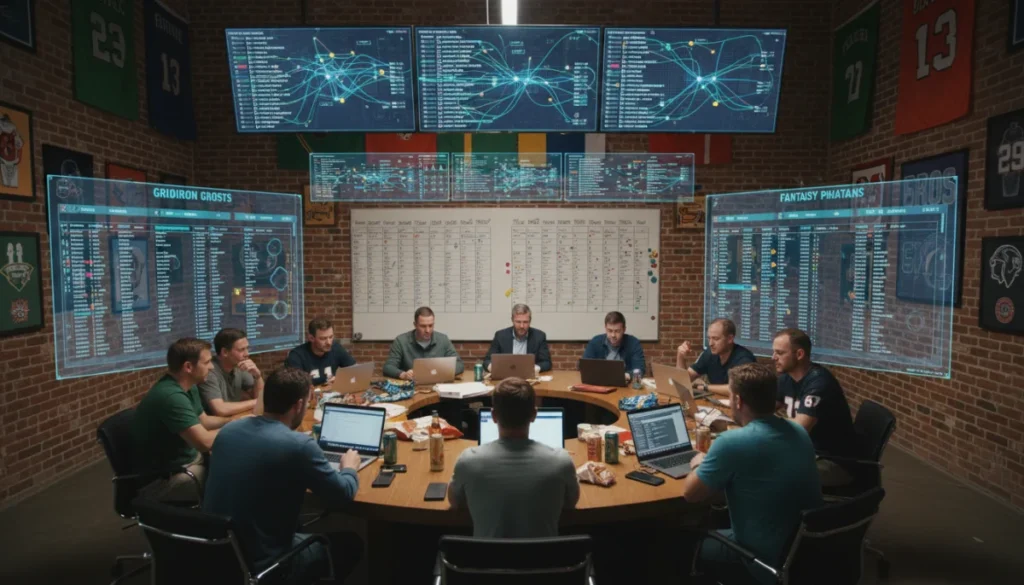
Mastering the 2026 fantasy football draft requires a data-driven approach, integrating advanced analytics and practical strategies to identify undervalued players and build a championship-caliber roster.
The pursuit of a fantasy football championship is a year-round endeavor, culminating in the high-stakes draft. For the 2026 season, success hinges on a sophisticated understanding of analytics and a nuanced approach to player valuation. This guide delves into Mastering Fantasy Football Draft Strategy for the 2026 Season: A Data-Driven Approach (PRACTICAL SOLUTIONS, INSIDER KNOWLEDGE), equipping you with the tools and insights needed to dominate your league.
Understanding the Evolving Landscape of Fantasy Football in 2026
The fantasy football world is constantly changing, with new statistical models, player roles, and league dynamics emerging each season. To truly master the 2026 draft, it’s crucial to acknowledge these shifts and adapt your preparation accordingly. Relying on outdated strategies can quickly put you at a disadvantage.
The NFL itself influences fantasy outcomes significantly. Rule changes, coaching philosophies, and emerging talent pools all contribute to the complexity. Staying ahead means not just tracking individual players but understanding the broader trends shaping the game.
The Impact of Advanced Analytics
Advanced analytics have revolutionized how we evaluate players. Metrics beyond traditional stats provide deeper insights into a player’s true value and potential. Understanding these metrics is no longer optional; it’s a necessity for competitive drafting.
- Expected Points Added (EPA): Measures the impact of each play on scoring probability, offering a more precise view of player efficiency.
- Target Share and Air Yards: Critical for wide receivers and tight ends, indicating their role in the offense and potential for high-volume production.
- Opportunity Share for Running Backs: Combines carries and targets to show a running back’s overall involvement in the team’s offensive scheme.
Adapting to NFL Rule Changes
Even minor NFL rule adjustments can have significant fantasy implications. For instance, changes to kick returns or extra point attempts can affect special teams scoring or even field position, indirectly impacting offensive output. Owners must monitor these changes closely during the offseason.
Furthermore, the increasing emphasis on player safety can alter usage patterns, particularly for running backs and high-impact defensive players. Understanding these trends helps predict potential workloads and injury risks, which are vital considerations during the draft.
In summary, the 2026 fantasy football season demands a proactive approach to understanding both the analytical and real-world changes in the NFL. Staying informed about advanced metrics and rule adjustments is foundational to building a winning draft strategy.
Pre-Draft Preparation: The Foundation of Success
A successful fantasy football draft is not won on draft day itself, but in the weeks and months leading up to it. Thorough pre-draft preparation is the cornerstone of a data-driven strategy, allowing you to identify sleepers, avoid busts, and capitalize on market inefficiencies. This phase involves deep dives into player projections, injury reports, and team situations.
Effective preparation goes beyond simply ranking players; it involves understanding the ‘why’ behind their projected performance. This includes analyzing coaching changes, free agency moves, and rookie impacts, all of which can drastically alter a player’s fantasy outlook.
Leveraging Player Projections and Tiers
Don’t just use one set of projections; cross-reference multiple sources to get a balanced view. Identify outliers and research why certain analysts might be higher or lower on a particular player. Tiers are also invaluable, grouping players of similar value to help you navigate your draft board efficiently.
- Consensus Projections: Combine projections from various reputable sources to create a more robust and less biased outlook.
- Tier-Based Drafting: Group players by expected fantasy output rather than strict rankings. This helps identify when to reach for a player in a thinning tier.
- Customizing Projections: Adjust projections based on your league’s scoring system and roster settings to maximize accuracy.
Injury Risk Assessment and Bye Week Planning
Injuries are an unfortunate but unavoidable part of football. Developing a system for assessing injury risk is crucial. Look beyond current injury reports to historical data and player durability. Similarly, planning for bye weeks can prevent roster headaches during the season.
Understanding a player’s injury history, including recurring issues or recent surgeries, provides a clearer picture of their potential availability. Diversifying your roster with players from different bye weeks ensures you don’t face a week with too many starters out. This foresight can be the difference between a win and a loss.
Ultimately, comprehensive pre-draft preparation, encompassing detailed player analysis, projection synthesis, and strategic injury and bye week planning, lays the groundwork for a dominant performance on draft day. It transforms mere guessing into informed decision-making.
Draft Day Execution: Adapting and Capitalizing
Draft day is where all your preparation comes to fruition. While a solid plan is essential, rigid adherence to it can be detrimental. The ability to adapt to the flow of the draft, capitalize on unexpected opportunities, and understand your league-mates’ tendencies is paramount. This requires a dynamic approach, balancing your pre-draft rankings with real-time decision-making.
Don’t be afraid to deviate from your board if a clear value pick presents itself or if your league-mates are drafting in an unpredictable manner. Flexibility is a key trait of successful fantasy managers.
Understanding Average Draft Position (ADP) and Value
ADP provides a general idea of when players are being drafted, but it’s not gospel. Use it to identify potential value picks (players falling below their ADP) and to avoid reaching too early for players who are typically available later. Identifying these value opportunities is a core tenet of data-driven drafting.
Moreover, understanding your league’s specific ADP can be even more valuable. Some leagues might have a strong preference for certain positions or teams, creating unique opportunities for savvy drafters to snag overlooked talent at a discount. Pay close attention to how your league-mates are valuing players.
Positional Scarcity and Roster Construction
The optimal roster construction often depends on your league’s scoring and roster settings. In some leagues, quarterbacks or tight ends might be scarcer, warranting an earlier pick. In others, a deep running back or wide receiver pool allows for waiting on those positions. Always consider scarcity relative to your league’s specific setup.
- Zero RB Strategy: Focus on elite wide receivers and tight ends early, then target high-upside running backs later.
- Robust RB Strategy: Prioritize two top-tier running backs in the early rounds, securing a strong foundation for your backfield.
- Late-Round QB/TE: Often viable in leagues with deep player pools at these positions, allowing you to load up on skill players.
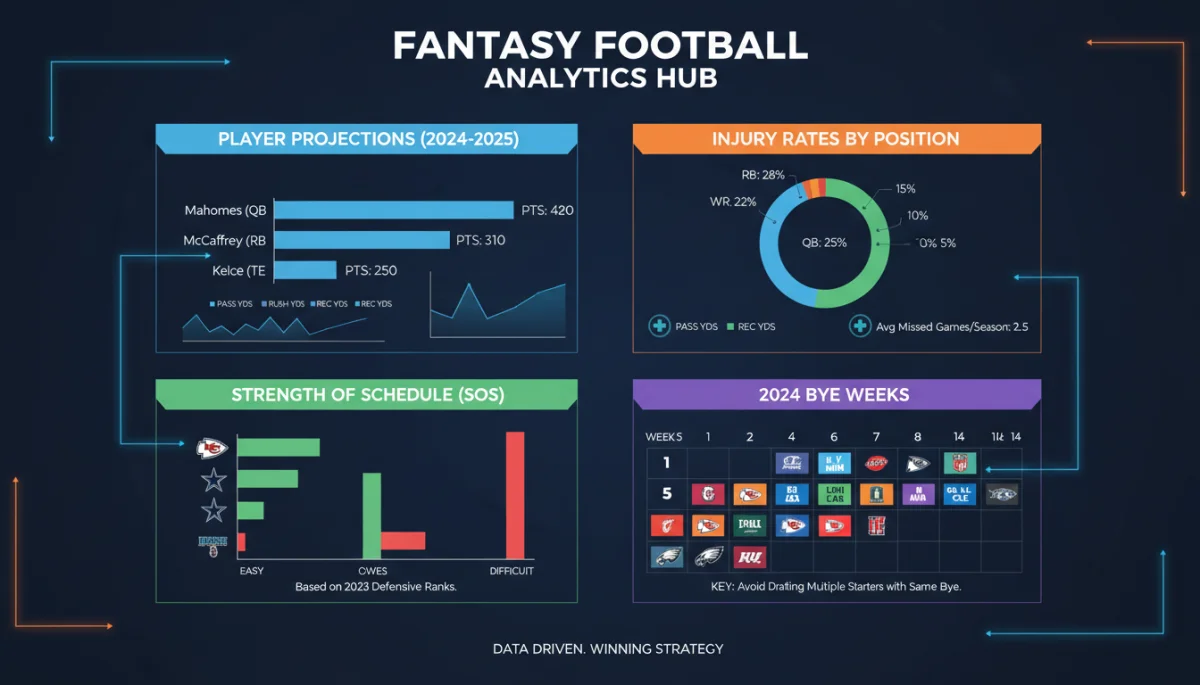
In essence, successful draft day execution is a blend of meticulous preparation and intelligent in-the-moment adaptation. By understanding ADP, recognizing value, and strategically constructing your roster based on positional scarcity, you significantly increase your chances of drafting a championship team.
Strategic Player Selection: Beyond the Obvious Picks
While securing top-tier talent is always a priority, true mastery of fantasy football drafting involves identifying players who outperform their average draft position. These ‘sleepers’ and ‘breakout candidates’ are the lifeblood of a championship roster, providing immense value without the hefty price tag. This requires a keen eye for underlying metrics and situational analysis.
Don’t just draft based on name recognition. Dig deeper into player situations, coaching changes, and target shares to uncover hidden gems that your league-mates might overlook. This is where data truly shines.
Identifying Breakout Candidates
Breakout candidates are often young players entering their prime, or veterans in new, more favorable situations. Look for increased opportunity, improved offensive line play, or a change in coaching philosophy that favors a particular player’s skillset. High target share from the previous season with limited touchdowns can often indicate positive regression.
Analytical tools can help here, too. Players with high efficiency metrics but low volume due to competition or limited snaps often represent prime breakout candidates if their opportunity increases. Pay attention to beat writer reports and training camp buzz for early indicators.
Spotting Value in Veteran Players
Veterans are often overlooked due to age concerns or perceived declining performance. However, many established players can still provide excellent fantasy value, especially if their ADP drops significantly. Look for veterans in stable offenses, with proven track records, who might be undervalued due to a down year or minor injury.
- New Team, New Opportunity: A veteran moving to a team with a clear need at their position or a more pass-heavy offense can revitalize their career.
- Bounce-Back Candidates: Players who underperformed due to injury or poor team play but are healthy and in a good situation for the upcoming season.
- Consistent Floor: Some veterans, even if they lack high upside, offer a reliable weekly point floor, which can be invaluable in deeper leagues.
Ultimately, strategic player selection goes beyond the consensus. It involves a calculated risk-reward assessment, leveraging data to uncover breakout stars and undervalued veterans who can provide significant returns on your draft capital. This approach builds depth and resilience into your roster.
In-Season Management: Sustaining Your Advantage
Drafting a great team is only half the battle; effective in-season management is crucial for sustaining your advantage and navigating the inevitable challenges of a fantasy football season. This involves continuous monitoring of player performance, waiver wire shrewdness, and strategic trade negotiations. A data-driven approach extends well beyond draft day.
Don’t set your lineup and forget it. The fantasy season is dynamic, and successful managers are constantly evaluating, adjusting, and planning ahead. Proactive management is key to staying competitive.
Waiver Wire Wisdom
The waiver wire is where championships are often won. Be quick to identify emerging talents, handcuff running backs, and players benefiting from unexpected opportunities. Use advanced metrics to project future performance rather than just reacting to past box scores. Look for players with increased snap counts, target shares, or red-zone opportunities.
Prioritize players who are seeing increased usage in efficient offenses. Don’t be afraid to drop underperforming players, even if you drafted them early. Your waiver wire strategy should be as thoughtful as your draft strategy.
Strategic Trading and Roster Optimization
Trading allows you to address roster weaknesses, consolidate talent, or prepare for future bye weeks. Look for trade partners who have a surplus at a position where you’re weak, and vice versa. Always aim to ‘buy low’ on underperforming stars and ‘sell high’ on players who have had unsustainable hot streaks.
Roster optimization isn’t just about starting your best players; it’s about maximizing your team’s potential week-to-week. Consider matchups, injury situations, and even weather conditions when setting your lineup. Every decision, no matter how small, contributes to your overall success.
In summary, effective in-season management is a continuous process of analysis, adaptation, and strategic decision-making. By mastering the waiver wire and engaging in intelligent trading, you can maintain and even enhance the competitive advantage gained from a strong draft.
The Psychological Edge: Mindset and Decision-Making
Beyond the spreadsheets and projections, the psychological aspect of fantasy football drafting plays a significant role. Maintaining a clear, rational mindset, avoiding common biases, and understanding the human element of decision-making can provide a critical edge. A data-driven approach is most effective when paired with sound psychological strategies.
Don’t let emotions dictate your draft picks. Overreacting to preseason hype or personal biases against certain players can lead to poor decisions. Trust your data and your process.
Avoiding Common Cognitive Biases
Several cognitive biases can derail even the most prepared fantasy manager. Confirmation bias, where you seek out information that confirms your existing beliefs, and recency bias, where you overemphasize recent events, are particularly dangerous. Be aware of these tendencies and actively work to counteract them.
- Confirmation Bias: Actively seek out dissenting opinions or data that challenges your initial assessment of a player.
- Recency Bias: Evaluate a player’s full body of work rather than just their last few games or recent news headlines.
- Anchoring Bias: Don’t get stuck on a player’s perceived value from previous seasons; reassess based on current data and situation.
Managing Risk and Uncertainty
Fantasy football is inherently uncertain, with injuries and unpredictable performances always a factor. Embrace this uncertainty rather than trying to eliminate it. Diversify your risk by drafting a balanced roster, and don’t overinvest in any single player, no matter how high their upside.
Understand that some risks are worth taking, especially in later rounds, while others are too costly early on. A calculated approach to risk management, informed by data, is far more effective than an overly conservative or reckless strategy. Trust your process and the data you’ve meticulously gathered.
Ultimately, a disciplined mindset, free from common biases and capable of managing risk, is the unseen advantage in fantasy football. Combining this psychological resilience with a data-driven strategy creates a truly formidable competitor ready to dominate the 2026 season.
| Key Strategy | Brief Description |
|---|---|
| Data-Driven Preparation | Utilize advanced analytics, cross-reference projections, and assess injury risks before the draft. |
| Dynamic Draft Execution | Adapt to draft flow, leverage ADP, and prioritize positional scarcity for optimal roster construction. |
| Value Player Selection | Identify sleepers, breakout candidates, and undervalued veterans using underlying metrics and situation analysis. |
| Continuous In-Season Management | Master waiver wire, execute strategic trades, and optimize your roster weekly to sustain advantage. |
Frequently Asked Questions About 2026 Fantasy Football Drafts
Key data points include Expected Points Added (EPA), target share, air yards, and opportunity share for running backs. These advanced metrics provide deeper insights into player efficiency and usage, moving beyond traditional statistics to reveal true fantasy value.
Look for players with high efficiency metrics but previously limited volume, indicating potential upside with increased opportunity. Analyze coaching changes, offensive line improvements, and increased target shares. Young players entering their third year often show significant growth, making them prime candidates.
This depends on your league’s scoring and roster settings. In PPR leagues, elite wide receivers can offer a safer floor. In standard leagues, top-tier running backs often provide a higher ceiling. Evaluate positional scarcity in your specific league to make an informed decision.
ADP helps identify value picks and avoid over-drafting. It provides a baseline for when players are typically selected. By comparing your own rankings and projections to ADP, you can spot players falling below their expected draft slot, offering significant value.
In-season management is critical for sustaining your advantage. Mastering the waiver wire to pick up emerging talent, making strategic trades to address weaknesses, and optimizing your lineup based on matchups are all essential. The draft is just the beginning of a successful fantasy season.
Conclusion
Mastering Fantasy Football Draft Strategy for the 2026 Season: A Data-Driven Approach (PRACTICAL SOLUTIONS, INSIDER KNOWLEDGE) is not merely about picking the right players; it’s about building a robust, adaptable framework for success. By meticulously preparing with advanced analytics, executing a dynamic draft plan, making informed player selections, and maintaining vigilant in-season management, you position yourself for a championship run. The psychological edge, characterized by rational decision-making and bias avoidance, further refines this strategy. Embrace the data, trust your process, and confidently navigate the complexities of fantasy football to emerge victorious in 2026.
