2026 World Cup’s New 48-Team Format: Tactical Breakdown

The 2026 World Cup introduces a revolutionary 48-team format, promising significant tactical shifts, increased global participation, and unprecedented competitive dynamics, reshaping the future of international football.
The football world is on the cusp of a monumental shift with the upcoming 2026 FIFA World Cup, where the tournament will expand to an unprecedented 48 teams. This significant change promises to redefine the landscape of international football, bringing both excitement and complex challenges. In this article, we’ll be exploring the 2026 World Cup’s new 48-team format: a tactical breakdown (comparison/analysis, recent updates), delving into its implications for teams, players, and fans alike.
Understanding the New 48-Team Format
The 2026 World Cup, hosted across the United States, Canada, and Mexico, marks a historic departure from the traditional 32-team structure. This expansion is designed to make the tournament more inclusive, offering more nations the chance to compete on the global stage. However, it also introduces a completely revised competitive framework that demands a fresh tactical approach from participating teams.
The initial proposal for the 48-team format involved 16 groups of three teams, a concept that sparked considerable debate. The primary concern was the potential for collusion in the final group stage matches, as one team would always be idle. This led FIFA to reconsider and ultimately adopt a different structure to ensure fairness and maximize competitive integrity throughout the tournament.
Evolution of the Group Stage Structure
FIFA officially confirmed a revised format in March 2023, shifting from the controversial three-team groups. This adjustment aims to maintain the excitement of the traditional World Cup group stage while accommodating the increased number of participants. The new structure ensures that every match carries significant weight and reduces the chances of tactical maneuvering that could undermine sporting fairness.
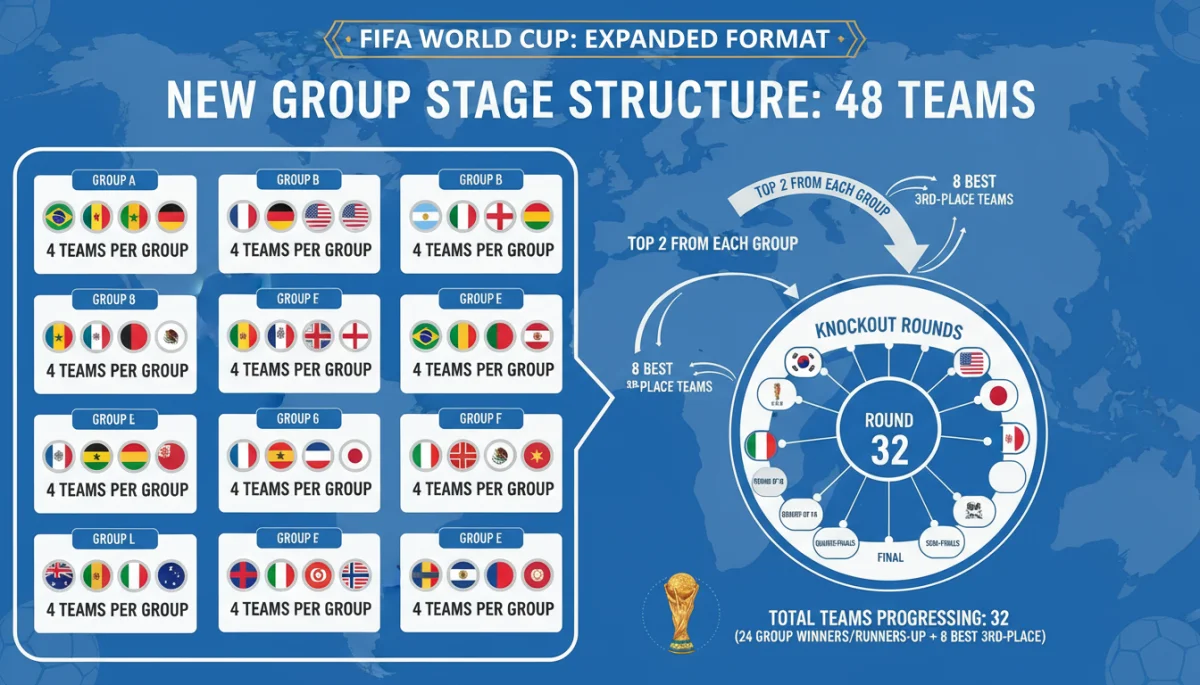
- 12 Groups of Four Teams: The tournament will now feature 12 groups, each comprising four teams. This mirrors the familiar format of previous World Cups and major continental championships, which is generally well-received by fans and teams.
- Increased Match Count: This change means a substantial increase in the total number of matches played, from 64 to 104. This will undoubtedly impact player fatigue, logistical planning, and broadcast schedules.
- Progression to Knockout Stage: The top two teams from each of the 12 groups will advance to the knockout stage, along with the eight best third-placed teams. This adds an extra layer of complexity and opportunity for teams that might struggle initially.
This revised group stage format is a crucial development, addressing many of the concerns raised about the initial three-team group proposal. It aims to strike a balance between expanding participation and maintaining the competitive spirit and integrity that defines the World Cup. The transition to 12 groups of four ensures that the tournament’s core competitive elements remain intact, albeit on a much larger scale.
Tactical Implications for Participating Teams
The expansion to 48 teams will inevitably lead to a profound shift in tactical approaches for all participating nations. Teams will need to adapt their strategies not only for the group stage but also for the extended knockout phase. The increased number of matches and the potential for a longer tournament run will test squad depth, player endurance, and coaching ingenuity like never before.
One of the most significant tactical changes will be the approach to the group stage. With 12 groups of four, and the possibility of third-placed teams advancing, the dynamics of qualification become more nuanced. Teams might prioritize goal difference or even strategic draws in certain scenarios, knowing that a third-place finish could still be enough to progress. This contrasts with the previous 32-team format where only the top two advanced, often leading to more direct, win-at-all-costs approaches in group matches.
Squad Management and Player Fitness
With the potential for an additional match in the knockout rounds for some teams (round of 32 instead of round of 16), squad management becomes paramount. Coaches will need to meticulously plan player rotations and recovery strategies to ensure their key players remain fit and fresh for the crucial stages of the tournament. This could see a greater emphasis on versatile players and deeper benches.
- Increased Player Load: Players could potentially play up to eight matches instead of seven if they reach the final, placing immense physical demands on them. This necessitates robust fitness regimes and effective recovery protocols.
- Importance of Squad Depth: Nations with strong reserves will have a distinct advantage. The ability to bring in quality players from the bench without a significant drop in performance will be critical for navigating the extended tournament.
- Strategic Substitutions: Coaches may be more inclined to make early or tactical substitutions to manage player minutes, especially in games where the outcome seems clear, or key players need rest for future encounters.
The tactical landscape of the 2026 World Cup will be a fascinating study in adaptation. Teams that can effectively manage their resources, adjust their strategies to the new group dynamics, and maintain peak physical condition throughout the extended competition will likely be the ones to succeed. The expanded format demands a more comprehensive and flexible tactical blueprint from every contender.
Impact on Emerging Football Nations
The primary driver behind the 48-team expansion is to provide more opportunities for nations, particularly those from confederations traditionally underrepresented in the World Cup. This move is expected to have a transformative effect on football development in these regions, offering unparalleled exposure and financial incentives. The dream of participating in the World Cup will become a tangible reality for more countries, inspiring new generations of players and fans.
For many emerging football nations, qualifying for the World Cup is not just about sporting achievement; it’s a catalyst for national pride, economic growth, and investment in sports infrastructure. The increased allocation of spots for AFC (Asia), CAF (Africa), CONCACAF (North, Central America and Caribbean), and OFC (Oceania) means that the qualification pathways, while still challenging, are now more accessible. This direct impact on national football federations cannot be overstated, as it provides a powerful incentive for long-term development.
Qualification Pathways and Development
The new qualification structure will see a significant boost in representation from various continents. For instance, Africa will now have nine direct slots, up from five, while Asia will have eight, up from four and a half. These changes are designed to reflect the global growth of football and ensure that the World Cup truly represents the world’s best.
- Increased Direct Slots: More guaranteed spots reduce the reliance on inter-confederation playoffs, making the qualification process more straightforward for many nations.
- Financial Windfall: Participation in the World Cup brings substantial financial rewards, which can be reinvested into youth development programs, coaching education, and domestic leagues in these emerging nations.
- Global Exposure: Playing on the biggest stage offers invaluable experience for players and raises the profile of their national leagues, potentially attracting more talent and investment.
The expansion offers a monumental opportunity for emerging football nations to showcase their talent and accelerate their footballing development. While the competitive challenge remains immense, the increased chance of participation will undoubtedly foster a more diverse and globally representative tournament, fulfilling FIFA’s vision of a truly global game.
Logistical Challenges and Tournament Schedule
Hosting a 48-team World Cup across three nations presents an unprecedented logistical undertaking. The sheer scale of the tournament, with 104 matches over an extended period, demands meticulous planning across various domains, including travel, accommodation, security, and infrastructure. The organizing committee, comprising representatives from the United States, Canada, and Mexico, faces the daunting task of coordinating across vast geographical distances and different regulatory frameworks.
The tournament schedule will also undergo significant adjustments. With an increased number of matches, the overall duration of the World Cup will extend, likely requiring a longer release period for players from their clubs. This will necessitate careful negotiation and coordination with domestic leagues and continental competitions to minimize disruption to the global football calendar. Player welfare, given the increased workload, will also be a paramount consideration in scheduling.
Infrastructure and Travel Considerations
The three host nations boast world-class infrastructure, but the sheer volume of teams and fans will test their capacities. Travel logistics between host cities, especially across international borders, will be a critical element of the planning. Teams will aim to minimize travel distances during the group stage to reduce player fatigue, adding another layer of complexity to the fixture planning.
- Venue Allocation: Distributing 104 matches across 16 host cities requires careful consideration of geographical clusters and travel efficiency for teams and fans.
- Fan Experience: Ensuring a seamless travel and accommodation experience for millions of international visitors will be a major challenge, requiring robust transportation networks and hospitality services.
- Security Measures: The expanded tournament footprint necessitates enhanced security coordination across multiple jurisdictions, ensuring the safety of participants and spectators.
The logistical challenges of the 2026 World Cup are immense, but with meticulous planning and collaboration, the host nations are well-positioned to deliver a memorable and successful tournament. The expanded format pushes the boundaries of event management, but also offers an opportunity to showcase the organizational capabilities of the North American hosts.
The Fan Experience: What to Expect
For fans, the 2026 World Cup promises an unparalleled spectacle, with more matches, more teams, and an extended festival of football. The multi-national hosting across the United States, Canada, and Mexico will offer diverse cultural experiences alongside the sporting action. However, the expanded format also brings considerations regarding ticket availability, travel costs, and the overall atmosphere of the tournament.
One of the most exciting aspects for fans will be the increased diversity of teams. Supporters of nations who have historically struggled to qualify will now have a greater chance to see their team compete on the biggest stage. This broader participation is expected to bring new energy and vibrant fan cultures to the tournament, enriching the overall experience for everyone involved. The prospect of seeing new rivalries emerge and underdog stories unfold will undoubtedly captivate audiences worldwide.
Navigating the Expanded Tournament
While the allure of more matches is undeniable, fans will need to plan their World Cup experience carefully. The extended duration and geographical spread of host cities mean that attending multiple matches, especially across different countries, will require significant logistical planning and financial commitment. Digital platforms and official travel packages will play a crucial role in helping fans navigate the tournament.
- Diverse Host Cities: Fans can experience the unique cultures of cities like New York, Los Angeles, Mexico City, and Vancouver, blending football with tourism.
- Increased Ticket Demand: With more teams, there’s an increased probability of smaller nations causing upsets against traditional giants, adding to the tournament’s drama and unpredictability.
Ultimately, the fan experience at the 2026 World Cup will be a balance of opportunity and challenge. The chance to witness a truly global football festival, with expanded participation and a rich tapestry of cultures, is incredibly exciting. However, careful planning will be key to maximizing enjoyment and navigating the logistical complexities of this historic tournament.
Comparing the 48-Team Format with Previous Editions
The evolution of the FIFA World Cup format has always reflected the growth and changing dynamics of global football. The jump from 32 to 48 teams for 2026 represents the most significant expansion since 1998, when the tournament moved from 24 to 32 teams. Understanding this comparison is crucial for appreciating the scale of the upcoming changes and their potential impact on the sport’s future.
Historically, smaller tournaments often led to fewer upsets and a more predictable progression of traditional powerhouses. While the 32-team format allowed for some surprises, the 48-team structure is designed to amplify this potential. The increased number of matches and the broader pool of participating nations mean that the path to the final will likely be more varied and less dominated by the usual suspects. This democratization of opportunity is a core principle behind the expansion, aiming to create a more globally competitive football landscape.
Historical Context and Future Outlook
The World Cup has consistently adapted to the global reach of football. From its humble beginnings with 13 teams in 1930 to 16, then 24, and eventually 32, each expansion has aimed to be more inclusive. The 48-team format continues this trend, acknowledging the significant development of football in regions beyond Europe and South America.
- 1998 Expansion (24 to 32 teams): This move introduced the current group stage format (8 groups of 4) and significantly increased the competitive field, leading to memorable moments and the rise of new contenders.
- 2026 Expansion (32 to 48 teams): The current expansion is even more ambitious, promising to fundamentally alter the tournament’s competitive balance and global representation.
- Potential for More Upsets: With more teams, there’s an increased probability of smaller nations causing upsets against traditional giants, adding to the tournament’s drama and unpredictability.
Comparing the 48-team format to its predecessors highlights a clear trajectory towards greater global inclusion and competitive diversity. While challenges remain, particularly in terms of logistics and maintaining quality across all matches, the potential for a more exciting and globally representative World Cup is immense. The 2026 tournament will set a new benchmark for international football competitions.
Recent Updates and Controversies
The journey to finalizing the 2026 World Cup format has not been without its twists and turns, marked by various proposals, debates, and adjustments. The initial announcement of a 48-team tournament immediately sparked discussion, with the proposed three-team group stage being the most contentious point. FIFA’s subsequent decision to revert to four-team groups was a direct response to feedback from stakeholders, demonstrating a willingness to adapt for the integrity of the game.
Beyond the format, other recent updates include the confirmation of host cities and the ongoing preparations for infrastructure and logistical coordination. While the excitement builds, some controversies persist, particularly concerning player welfare given the extended tournament duration and the increased number of matches. Clubs and player unions continue to voice concerns about the demands placed on athletes, advocating for robust recovery protocols and appropriate scheduling to prevent burnout and injuries.
Addressing Key Concerns
FIFA has actively engaged with stakeholders to address concerns, particularly regarding the competitive structure and player workload. The decision to adopt 12 groups of four teams, instead of 16 groups of three, directly tackled fears of dead rubbers and potential collusion. However, the overall increase in match count and tournament length remains a point of discussion.
- Player Welfare Debates: Discussions are ongoing between FIFA, clubs, and player associations to ensure player well-being is prioritized, including adequate rest periods and reduced club commitments pre-tournament.
- Financial Distribution: The increased revenue generated by the expanded tournament also brings debates about fair distribution among participating federations, clubs, and players.
- Environmental Impact: Hosting across three large nations raises environmental concerns regarding travel and carbon footprint, prompting discussions on sustainable practices for the event.
Despite the challenges and ongoing debates, the 2026 World Cup is steadily taking shape. FIFA’s responsiveness to critical feedback, particularly regarding the group stage format, indicates a commitment to delivering a fair and exciting tournament. As preparations continue, transparency and collaboration will be key to mitigating remaining controversies and ensuring a successful and celebrated event.
| Key Aspect | Description of Change |
|---|---|
| Team Expansion | From 32 to 48 national teams, increasing global participation. |
| Group Stage Format | Revised to 12 groups of four teams, instead of 16 groups of three. |
| Match Count | Increased from 64 to 104 matches, extending tournament duration. |
| Knockout Stage | Introduces a Round of 32, with top two and eight best third-placed teams advancing. |
Frequently Asked Questions about the 2026 World Cup Format
FIFA expanded the World Cup to 48 teams primarily to foster global football development and provide more nations with the opportunity to participate in the prestigious tournament. This move aims to increase inclusivity and generate greater interest in football worldwide, offering more diverse representation on the global stage.
The 2026 World Cup will feature 12 groups, each comprising four teams. This revised format ensures competitive balance and reduces the likelihood of tactical collusion, addressing concerns raised by the initially proposed three-team groups. The top two teams from each group, plus the eight best third-placed teams, will advance.
The 2026 World Cup will feature an unprecedented 104 matches, a significant increase from the 64 matches played in previous 32-team tournaments. This expansion necessitates a longer tournament duration and more extensive logistical planning across the three host nations: the United States, Canada, and Mexico.
Confederations such as CAF (Africa), AFC (Asia), and CONCACAF (North, Central America and Caribbean) will significantly benefit from the expansion, receiving additional direct qualification slots. This will lead to increased representation from these regions, providing more pathways for their national teams to compete in the World Cup.
The primary logistical challenges include coordinating across three host nations, managing increased player travel and fatigue, ensuring adequate infrastructure for 104 matches, and accommodating a larger influx of fans. Player welfare and the extended tournament duration also pose significant planning hurdles for FIFA and the organizing committee.
Conclusion
The 2026 FIFA World Cup’s expansion to a 48-team format represents a bold new chapter for international football. While it introduces significant tactical, logistical, and competitive challenges, it also promises unparalleled opportunities for global participation and development. The revised group stage structure, with 12 groups of four, addresses many initial concerns, ensuring a more equitable and exciting tournament. As the world gears up for this monumental event, the focus remains on delivering a spectacle that not only celebrates the beautiful game but also propels its growth and inclusivity on a truly global scale. The tactical breakdowns, comparisons, and recent updates highlight a tournament poised to redefine the World Cup experience for players, teams, and fans across the globe.
