NBA’s New Luxury Tax Thresholds for 2026: Financial Impact Analysis
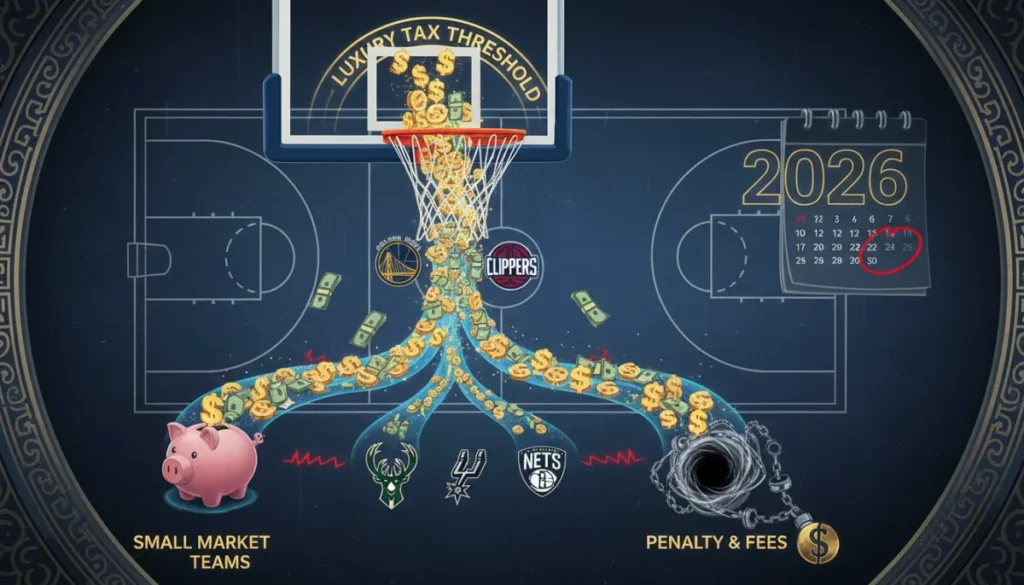
The NBA’s new luxury tax thresholds for 2026 are poised to fundamentally reshape team financial strategies, introducing more stringent penalties for high-spending franchises and impacting roster construction significantly.
The landscape of professional basketball is constantly evolving, not just on the court but also in the intricate financial framework that governs its teams. As we approach 2026, the NBA is set to introduce significant changes to its luxury tax thresholds, a development that will undoubtedly reshape how franchises manage their rosters and compete for championships. Understanding the implications of the NBA luxury tax 2026 is crucial for fans, analysts, and team executives alike, as these adjustments will have profound financial impacts and strategic consequences.
Understanding the NBA Luxury Tax System
The NBA’s luxury tax system is a critical component of its collective bargaining agreement (CBA), designed to promote competitive balance by penalizing teams that exceed a predetermined salary cap threshold. This system aims to prevent wealthier teams from simply outspending their rivals indefinitely, ensuring a more level playing field across the league.
Historically, the luxury tax has been a progressive tax, meaning the penalties increase as a team’s payroll further exceeds the threshold. These funds are then redistributed among non-taxpaying teams, creating an incentive for fiscal responsibility. The core idea is to deter excessive spending while still allowing teams the flexibility to invest in top-tier talent.
How the Luxury Tax Works
The luxury tax operates on a tiered structure, with different penalty rates applied based on how much a team’s payroll surpasses the tax line. These rates escalate for repeat offenders, known as ” repeater tax” teams, which have paid the tax in at least three of the previous four seasons. This mechanism significantly amplifies the financial burden on consistently high-spending franchises.
- Thresholds: The specific dollar amount that separates taxpaying from non-taxpaying teams.
- Penalties: Monetary fines levied on teams exceeding the threshold, with rates increasing incrementally.
- Repeater Tax: Higher penalty rates for teams that repeatedly pay the luxury tax, acting as a stronger deterrent.
In essence, the luxury tax is a balancing act. It allows teams to spend big to acquire star players, but it also imposes a financial cost that can quickly become astronomical, forcing difficult decisions about roster construction and long-term financial health. The upcoming changes for 2026 are expected to tighten these financial constraints even further.
The New Luxury Tax Thresholds for 2026
The year 2026 marks a pivotal moment for the NBA’s financial landscape, as new luxury tax thresholds are set to be implemented. These adjustments are a direct result of the latest collective bargaining agreement, reflecting the league’s ongoing efforts to adapt to economic shifts and maintain competitive equilibrium. While the exact figures are subject to final calculations based on league revenues, the general direction points towards a more restrictive environment for high-spending teams.
These new thresholds are anticipated to be a significant increase from current levels, yet the structure of the penalties will also see modifications. The goal is to discourage super-team formation driven purely by financial might, encouraging more strategic and sustainable team-building practices across the league.
Projected Increases and Their Rationale
The increases in the luxury tax thresholds are largely tied to the league’s projected revenue growth, particularly from new media rights deals. As the NBA’s overall financial pie expands, so too do the salary cap and luxury tax lines. However, the accompanying penalty structures are being recalibrated to ensure that the increased thresholds don’t simply become a license for unlimited spending by the wealthiest owners.
- Revenue Growth: New media deals and global expansion contribute to higher league revenues, influencing cap and tax increases.
- Competitive Balance: A primary driver for adjusting thresholds is to foster a more balanced league where more teams can realistically compete for championships.
- Owner Accountability: Encouraging owners to make more prudent financial decisions regarding roster construction and player contracts.
The rationale behind these changes is multifaceted, aiming to protect smaller market teams from being perpetually outspent while still allowing larger market teams to operate with some financial flexibility. The balance is delicate, and the 2026 thresholds represent the league’s latest attempt to strike that equilibrium.
Financial Penalties: What Teams Can Expect
The introduction of new luxury tax thresholds for 2026 brings with it a revised set of financial penalties that will significantly impact team budgets. These penalties are not merely theoretical; they translate into substantial monetary losses for franchises that fail to manage their payroll effectively. The severity of these penalties escalates rapidly, particularly for repeat offenders, making careful financial planning an absolute necessity.
Teams that consistently exceed the luxury tax line will find themselves paying millions, sometimes tens of millions, in fines. These funds are then distributed to non-taxpaying teams, further widening the financial gap between the spenders and the savers, albeit in a way designed to help the latter.
Impact on Team Budgets and Spending Habits
The direct impact on team budgets will be immediate and substantial. Owners will need to re-evaluate their willingness to pay exorbitant tax bills, potentially leading to tougher decisions on player retention and acquisition. This could force teams to prioritize efficiency and value in their contracts, rather than simply pursuing the biggest names at any cost.
- Increased Fines: Higher tax rates and thresholds mean larger financial penalties for exceeding the salary cap.
- Strategic Adjustments: Teams will likely adopt more conservative spending strategies, focusing on developing talent and making shrewd trades.
- Owner Reluctance: Even wealthy owners may become more hesitant to incur massive tax penalties, influencing their team’s competitive outlook.
Ultimately, the new penalties are designed to be a significant deterrent. They will compel teams to think critically about every dollar spent, potentially leading to a more dynamic and competitive league where financial prudence is as valued as on-court performance.
Comparison with Previous Luxury Tax Regimes
To truly appreciate the significance of the 2026 luxury tax thresholds, it’s essential to compare them with previous regimes. The NBA’s approach to salary cap and luxury tax has evolved considerably over the years, each iteration attempting to address perceived imbalances and adapt to the league’s growing financial power. The changes for 2026 represent a continuation of this evolution, building upon lessons learned from past agreements.
Earlier versions of the luxury tax were often seen as less punitive, allowing some teams to consistently outspend others without facing truly crippling financial consequences. This led to periods where a few dominant teams, often from large markets, could maintain their competitive edge primarily through financial might.
Evolution of Financial Penalties
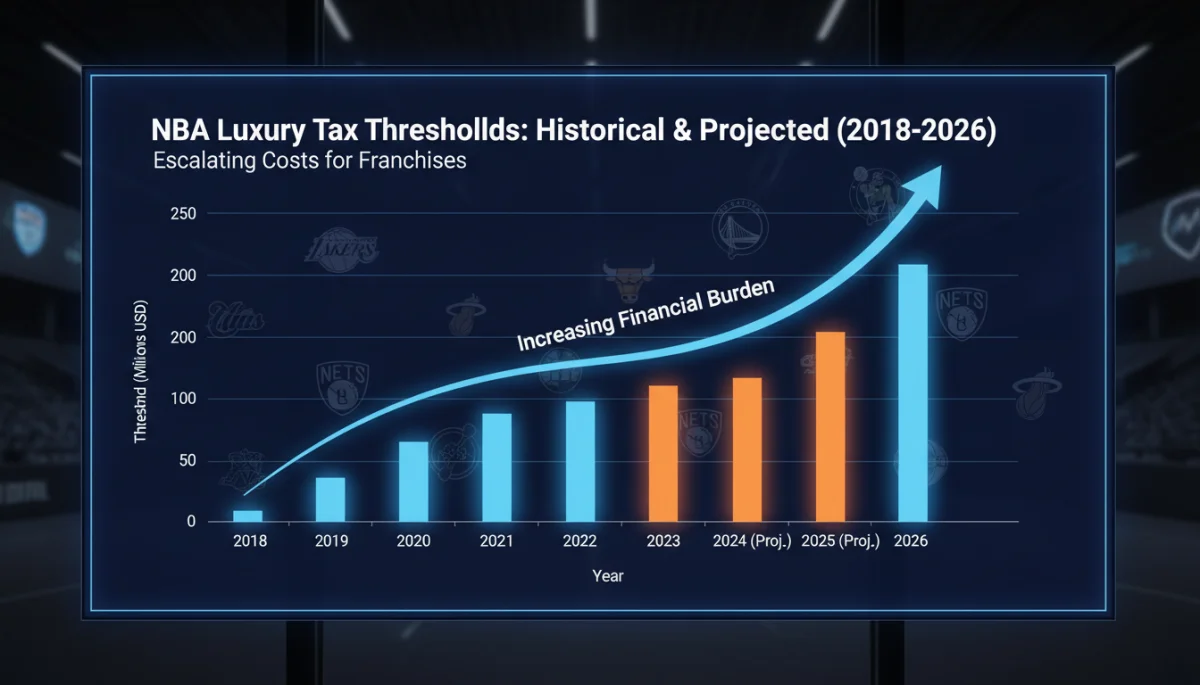
The history of the NBA’s luxury tax is marked by a gradual increase in both the thresholds and the severity of the penalties. The “repeater tax” mechanism, introduced in a previous CBA, was a significant step towards making the tax a more effective deterrent. The 2026 adjustments are expected to refine this further, making it even harder for teams to operate deep into the tax without considerable financial pain.
- Pre-2011 CBA: Generally softer penalties, less impactful on spending decisions.
- 2011 CBA: Introduction of the repeater tax, significantly increasing costs for consistent overspenders.
- 2017 CBA: Further adjustments to tax rates, slightly increasing the financial burden.
- 2026 CBA (Projected): Expected to introduce even higher thresholds and potentially more aggressive penalty escalations.
This historical perspective highlights a clear trend: the NBA is continually striving to make its financial regulations more robust. The 2026 changes are not an isolated event but rather another chapter in the league’s ongoing effort to balance financial growth with competitive integrity, learning from the successes and shortcomings of past policies.
Strategic Implications for Team Building
The new luxury tax thresholds for 2026 will undoubtedly force NBA franchises to re-evaluate their team-building philosophies. The increased financial penalties mean that every contract, every trade, and every draft pick will carry heightened importance. Teams will need to be more strategic and disciplined in their approach to roster construction, emphasizing long-term sustainability over short-term gratification.
This shift could lead to a renewed focus on player development, smart drafting, and efficient contract management. The days of simply throwing money at every problem might become a relic of the past, as the financial repercussions will be too severe for even the wealthiest owners to ignore.
Roster Construction and Player Movement
Teams deep in the luxury tax will face immense pressure to shed salary, potentially leading to more trades involving high-salaried players. This could also impact free agency, as players might find fewer teams willing to offer maximum contracts if it means pushing a team significantly over the tax line. The market for mid-tier contracts and veteran minimums could become more competitive.
- Emphasis on Draft Picks: Developing homegrown talent becomes more cost-effective and crucial.
- Trade Market Dynamics: More pressure on taxpaying teams to make salary-shedding trades.
- Free Agency Impact: Fewer teams might be able to afford multiple max-contract players, altering player movement.
Ultimately, these strategic implications aim to create a more dynamic league where success is not solely dictated by financial power. Teams will need to be more creative and efficient in how they build and maintain their rosters, fostering a greater diversity of competitive strategies.
Challenges and Opportunities for Franchises
The upcoming NBA luxury tax 2026 thresholds present both significant challenges and unique opportunities for franchises across the league. While the increased penalties will undoubtedly strain the budgets of high-spending teams, they also open doors for smaller market teams and those committed to fiscal prudence to gain a competitive edge. Navigating this new financial landscape will require foresight, adaptability, and a clear understanding of the league’s economic mechanisms.
For teams accustomed to spending freely, the challenge will be to maintain competitiveness while adhering to stricter financial limits. This might involve difficult decisions regarding star players, long-term contracts, and the overall allocation of resources. The margin for error in contract negotiations will shrink considerably.
Adapting to the New Financial Climate
Teams that can effectively adapt to this new financial climate will be those that prioritize sustainable growth and smart asset management. This includes developing robust scouting departments, investing in player development programs, and mastering the nuances of the collective bargaining agreement to maximize cap space and avoid punitive taxes. The focus will shift from simply acquiring talent to acquiring the *right* talent at the *right* price.
- For large market teams: The challenge lies in maintaining star power without incurring unsustainable tax bills, potentially leading to more difficult roster decisions.
- For small market teams: An opportunity to close the competitive gap by building through the draft and making shrewd free-agent signings, benefiting from redistributed tax payments.
- For all teams: Increased importance of financial literacy and strategic planning at the executive level.
The landscape of NBA team management is set to become even more complex and intriguing. The teams that embrace these changes, rather than resist them, will be the ones best positioned for sustained success in the post-2026 era, turning potential challenges into genuine opportunities for growth and competitive advantage.
| Key Aspect | Brief Description |
|---|---|
| New Thresholds | Increased luxury tax lines for 2026, tied to league revenue growth and new CBA. |
| Financial Penalties | More stringent and escalating fines for teams exceeding the new thresholds, especially for repeat offenders. |
| Team Building Impact | Forces more strategic roster construction, emphasizing drafting, player development, and efficient contract management. |
| Competitive Balance | Aims to prevent super-team formation through unlimited spending, promoting a more balanced and competitive league. |
Frequently Asked Questions About NBA Luxury Tax 2026
The primary goal is to promote competitive balance across the league. By penalizing teams that significantly exceed the salary cap, the system aims to deter unlimited spending by wealthy franchises, ensuring that financial might does not exclusively determine on-court success and fostering a more equitable playing field.
The 2026 thresholds are expected to be higher due to increased league revenues, but they will also come with more stringent and rapidly escalating penalty rates, especially for repeater tax teams. This makes it significantly more expensive for franchises to operate deep into the tax compared to previous collective bargaining agreements.
A ‘repeater tax’ team is a franchise that has paid the luxury tax in at least three of the previous four seasons. This designation is significant because it triggers much higher penalty rates, amplifying the financial burden and acting as a stronger deterrent against continuous high spending.
The changes will force teams to be more strategic and financially disciplined. There will likely be a greater emphasis on drafting and developing young talent, making shrewd trades, and managing contracts efficiently to avoid severe tax penalties, potentially leading to more player movement and tougher decisions on high-salaried players.
The intention is certainly to enhance competitive balance. By making it more costly for a few teams to monopolize top talent through unlimited spending, the new thresholds aim to create a more level playing field, giving a wider range of franchises a realistic path to contention and fostering greater league-wide competition.
Conclusion
The impending adjustments to the NBA luxury tax 2026 thresholds represent a significant evolution in the league’s financial governance. These changes are poised to reshape team strategies, influence player movement, and ultimately impact the competitive landscape for years to come. While presenting formidable challenges for high-spending franchises, they also offer unique opportunities for teams committed to sustainable growth and intelligent asset management. The NBA continues its quest for optimal competitive balance, and these new financial rules are a testament to that ongoing commitment, ensuring a more dynamic and engaging future for basketball enthusiasts.
