CFP Expansion 2026: 12-Team Playoff Matchup Breakdown
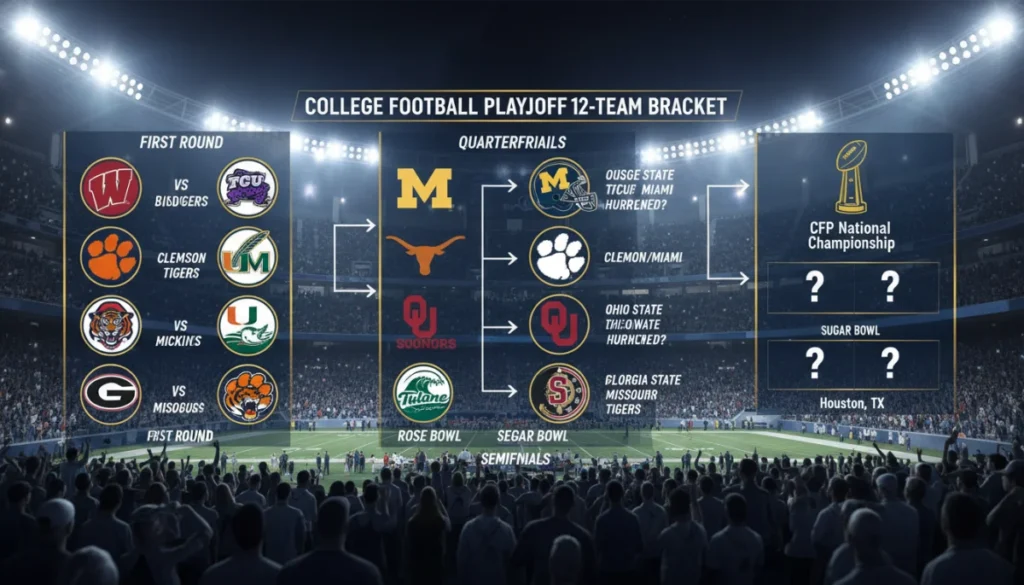
The College Football Playoff expansion to 12 teams for 2026 fundamentally redefines the postseason structure, offering a broader path to the national championship for more deserving programs.
The landscape of college football is on the brink of a monumental shift with the highly anticipated College Football Playoff expansion to 12 teams for 2026. This transformative change promises to inject unprecedented excitement and debate into the sport, moving beyond the long-standing four-team format. Fans and analysts alike are eager to dissect the potential new matchup scenarios and understand how this evolution will reshape the path to a national championship.
Understanding the New 12-Team Playoff Format
The decision to expand the College Football Playoff (CFP) to 12 teams marks a significant departure from its previous iterations. This new format, set to be fully implemented by the 2026 season, aims to create a more inclusive and equitable postseason, allowing a wider array of teams to compete for the sport’s ultimate prize. The core objective is to reward regular-season success while maintaining the integrity of championship contention.
Key Structural Changes and Seeding
- Automatic Qualifiers: The six highest-ranked conference champions will receive automatic bids, ensuring representation from various conferences.
- At-Large Bids: The next six highest-ranked teams, regardless of conference affiliation, will fill out the remaining spots.
- First-Round Byes: The top four conference champions will earn a first-round bye, gaining a significant advantage by skipping the initial round of games.
This structure ensures that conference success is heavily rewarded, providing an incentive for teams to perform well within their respective leagues. It also guarantees that strong teams from conferences outside the traditional power structures have a legitimate shot at the title.
The move to a 12-team playoff also introduces a new dynamic for regular-season strategy. Teams will not only be vying for a spot in the top 12 but also for a coveted top-four seed to secure that crucial first-round bye. This could lead to even more intense competition in the final weeks of the season, as teams battle for positioning.
Analyzing Potential Matchup Scenarios in the First Round
With 12 teams entering the fray, the first round of the CFP will feature four exciting matchups, played at campus sites or neutral venues. These games are designed to be high-stakes contests that immediately capture national attention, setting the tone for the rest of the playoff.
The Impact of Home-Field Advantage
- Fan Engagement: Home games will create an electric atmosphere, boosting local economies and increasing fan participation.
- Travel Logistics: Lower-seeded teams will face the challenge of traveling to a hostile environment, adding another layer of difficulty.
- Weather Considerations: Games played in late December could be affected by regional weather patterns, potentially favoring teams accustomed to colder climates.
Imagine a scenario where a strong SEC team travels north to face a Big Ten contender in snowy conditions; the strategic implications are immense. This adds another layer of intrigue and unpredictability to the initial playoff matchups, making every game a must-watch event.
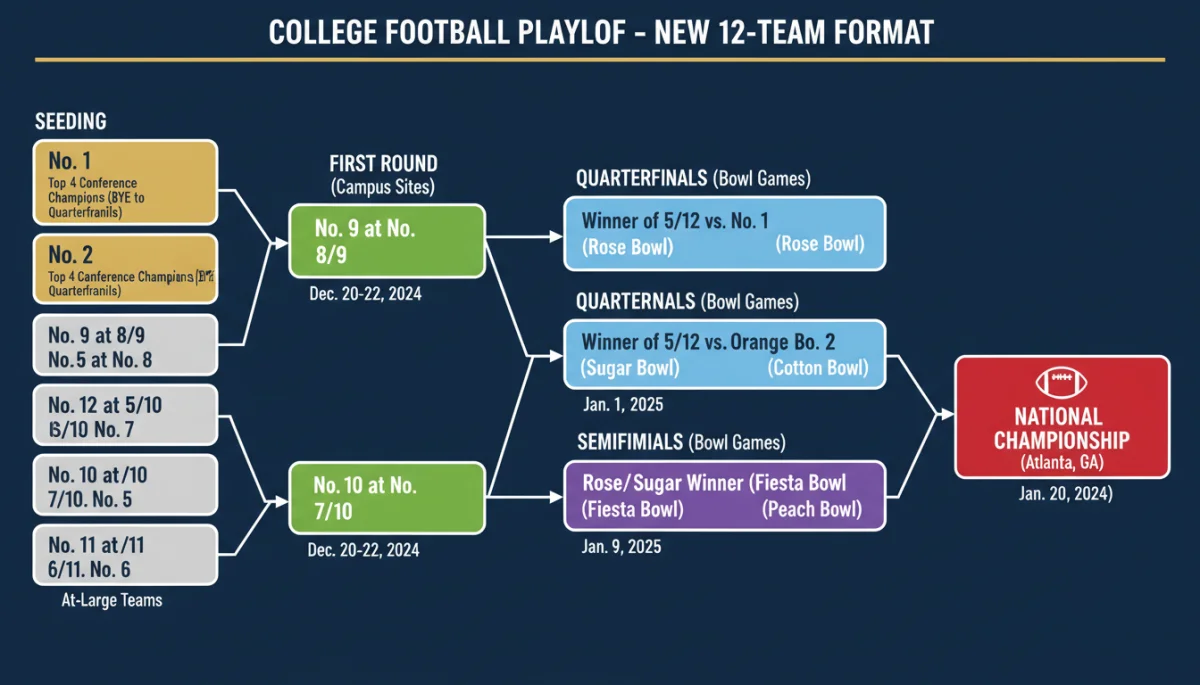
The first round will pit the No. 12 seed against the No. 5 seed, No. 11 against No. 6, No. 10 against No. 7, and No. 9 against No. 8. These matchups are likely to be competitive, as all teams will have proven themselves worthy of a playoff spot. The outcome of these games will undoubtedly shape the narrative for the quarterfinals.
Quarterfinal and Semifinal Dynamics
Following the first-round games, the four winners will advance to face the top four seeded teams, who would have enjoyed a bye week. These quarterfinal matchups are expected to be played at neutral sites, continuing the tradition of high-profile bowl games hosting the latter stages of the playoff.
The Advantage of a First-Round Bye
- Rest and Recovery: Players benefit from an additional week of rest, reducing the risk of injuries and improving performance.
- Strategic Preparation: Coaches have more time to scout opponents and develop tailored game plans.
- Momentum vs. Freshness: The debate will always exist whether carrying momentum from a first-round win outweighs the freshness of a bye week.
The quarterfinals will see the winner of the No. 12 vs. No. 5 game face the No. 4 seed, the winner of No. 11 vs. No. 6 face the No. 3 seed, and so on. This setup guarantees that the top teams will eventually meet, creating compelling narratives and high-stakes contests. The semifinals will then feature the winners of these quarterfinal matchups, culminating in the national championship game.
Comparison with the Previous Four-Team Format
The shift from a four-team to a 12-team playoff fundamentally alters the competitive landscape. The four-team format, while providing thrilling matchups, often left deserving teams on the outside looking in, sparking annual debates about selection criteria and perceived biases.
Addressing the “Eye Test” vs. “Best Teams” Debate
One of the primary motivations for expansion was to mitigate the subjective nature of the four-team selection process. The expanded field aims to be more inclusive, reducing the controversy surrounding which teams truly deserved a shot at the title.
- Reduced Subjectivity: More slots mean fewer contentious decisions by the selection committee.
- Increased Opportunities: Teams with one or two losses, or those from less prominent conferences, now have a clearer path.
- Focus on Performance: The emphasis shifts from subjective rankings to on-field results and conference championships.
While the four-team format delivered intense single-elimination games, it often felt exclusive. The 12-team model embraces a broader definition of championship contention, acknowledging that college football’s strength extends beyond a handful of perennial powerhouses. This expansion could lead to more Cinderella stories and unexpected runs, mirroring the excitement of other major college sports tournaments.
The previous system often led to complaints about conference favoritism or the exclusion of deserving teams. The new format, by incorporating automatic bids for conference champions, aims to create a more balanced and representative playoff field, ensuring that success across different conferences is recognized and rewarded.
Recent Updates and Future Implications
The journey to the 12-team playoff has involved extensive discussions, negotiations, and compromises among various stakeholders within college football. Recent updates confirm the timeline and provide clarity on the implementation details, paving the way for this historic change.
Key Decisions and Roadblocks Overcome
- Consensus Building: Agreement among conferences and stakeholders was crucial for moving forward.
- Logistical Planning: Developing a new schedule that accommodates additional playoff games without overly burdening student-athletes.
- Financial Considerations: Ensuring a fair distribution of the increased revenue generated by the expanded playoff.
The expanded playoff is expected to generate significantly more revenue, which will be distributed among the participating conferences and institutions. This financial incentive was a major driving force behind the agreement, promising to further invest in collegiate athletics programs. The long-term implications for recruiting, coaching salaries, and facilities are substantial, potentially widening the gap between programs that consistently make the playoff and those that do not.
As 2026 approaches, the college football world will be closely watching how teams adapt to the new format. The expanded playoff is not just a change in numbers; it’s a fundamental redefinition of what it means to contend for a national championship in college football.
Impact on Regular Season and Bowl Games
The expansion of the College Football Playoff will undoubtedly have a profound effect on the regular season and the traditional bowl game landscape. The stakes for every game will be elevated, and the significance of conference championships will be amplified, as more teams vie for a playoff spot.
Elevating Regular Season Stakes
- Enhanced Competition: Teams will play with greater intensity throughout the season, knowing a playoff spot is within reach.
- Conference Championship Value: Winning a conference title guarantees a spot and potentially a first-round bye.
- Strategic Scheduling: Programs might adjust their non-conference schedules to boost their strength of schedule for ranking purposes.
The traditional bowl game system will also need to adapt. While the major bowls will host the quarterfinals and semifinals, other bowl games will likely need to redefine their value proposition to remain relevant. They may become showcases for up-and-coming talent or rewards for teams that just missed the expanded playoff. The overall college football calendar will be stretched further into January, creating a longer and more engaging postseason for fans. This extended season will also require careful management of player welfare, considering the increased number of high-intensity games.
The changes are expected to foster a more competitive environment across all divisions, as every team has a more tangible goal to strive for. This could lead to a more exciting and unpredictable regular season, with more teams remaining in contention for a playoff spot deeper into the fall.
| Key Aspect | Description |
|---|---|
| New Format | Expanded to 12 teams, including 6 conference champions and 6 at-large bids, starting 2026. |
| First-Round Byes | Top 4 conference champions receive a crucial bye, advancing directly to quarterfinals. |
| Home Field Advantage | First-round games hosted at the higher-seeded team’s campus, boosting fan engagement. |
| Impact on Regular Season | Elevates stakes for every game and amplifies the importance of conference championships. |
Frequently Asked Questions About the 12-Team CFP Expansion
The expanded 12-team College Football Playoff format is officially set to commence with the 2026 college football season, though discussions have occurred about potentially accelerating its implementation.
The selection process includes the six highest-ranked conference champions receiving automatic bids, along with the next six highest-ranked teams, regardless of their conference affiliation, earning at-large berths.
The four highest-ranked conference champions among the automatic qualifiers will be granted a first-round bye, allowing them to advance directly to the quarterfinal round.
The first-round matchups of the 12-team College Football Playoff will be hosted at the home stadiums of the higher-seeded teams, creating an exciting home-field advantage.
Major bowl games will continue to host quarterfinal and semifinal matchups. Other traditional bowls may need to adapt their roles, potentially serving as showcases for teams outside the expanded playoff.
Conclusion
The College Football Playoff expansion to 12 teams for 2026 represents a pivotal moment for the sport, promising a more inclusive, dynamic, and ultimately more exciting postseason. By broadening access to the championship and introducing home-field advantages in early rounds, the new format aims to address long-standing criticisms while enhancing fan engagement. As the college football world moves towards this new era, the potential for thrilling matchups and unexpected championship runs has never been greater, solidifying its place as a premier American sporting spectacle.
